
[Suwan News = Reporter Yoon Si-young] The 2025 KIAPS International Symposium was held in Seoul for three days, from November 10 to 12, with key agenda items including the practical barriers to “R2O (Research → Practice)” and improvements to model physical processes.
Organized by the Korean Integrated Numerical Weather Prediction System (KIAPS) Project Team, this symposium was held to enhance the performance of “KIM (Korean Integrated Model),” Korea’s independently developed numerical weather prediction model, and to share the latest global trends in weather and climate prediction technology.
Dr. Song-You Hong of the National Center for Atmospheric Research (NCAR) in the United States, in a presentation titled “Opportunities and Challenges of R2O,” pointed out that outstanding research achievements in the field of numerical weather prediction (NWP) are being applied to actual forecasting operations at a slow pace.
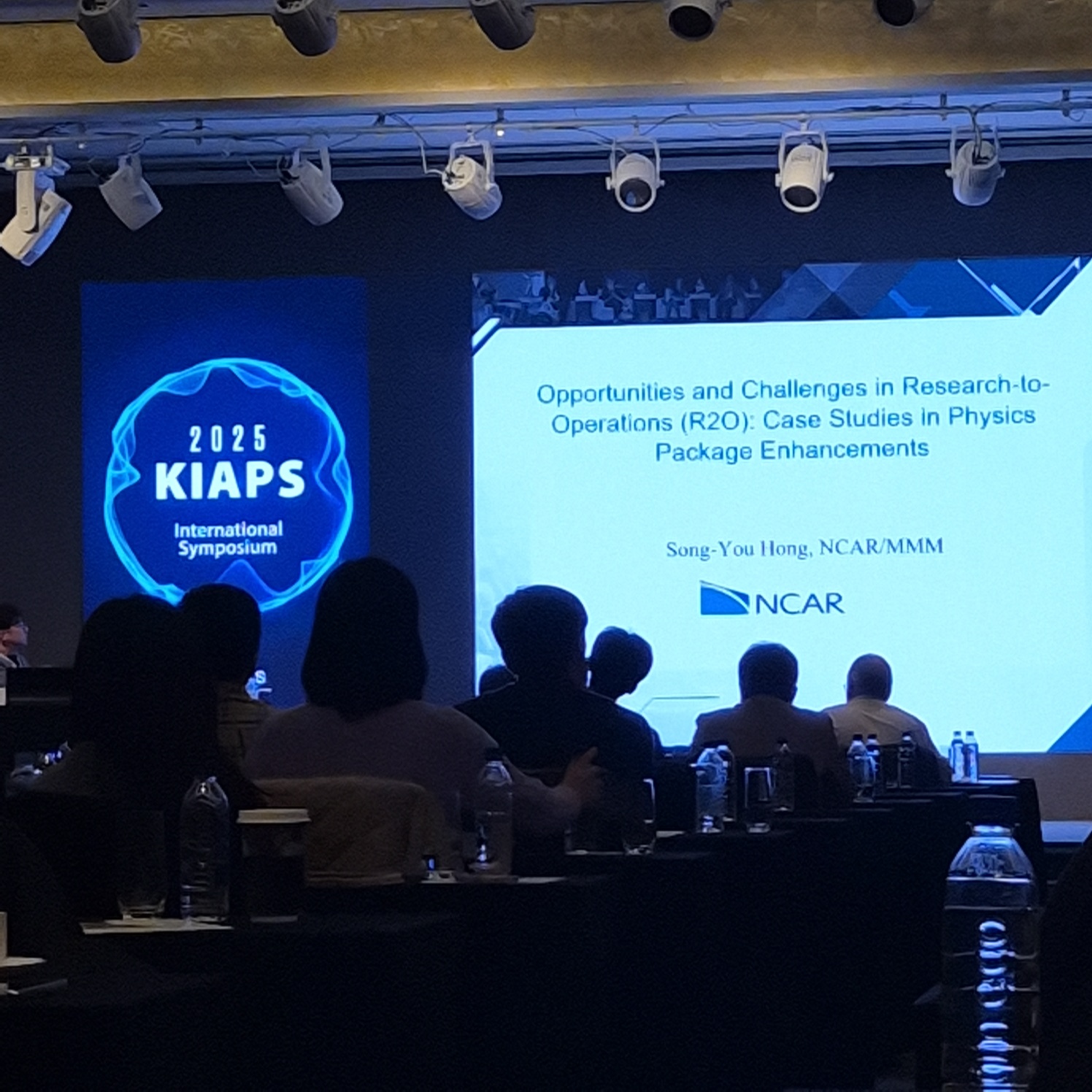
Dr. Song stated, "There is a 'misalignment of priorities' in which operational centers prioritize improving the accuracy of immediate forecasts, while the research community prioritizes long-term innovation," and emphasized the importance of ongoing collaboration and dialogue to overcome the resulting "disconnect."
This is a challenge shared by leading global models, including not only KIAPS’s KIM model but also NOAA’s GFS and NCAR’s WRF.
At the symposium, in addition to the R2O issue, there was a detailed technical discussion on how to improve the forecasting accuracy of the KIM model.
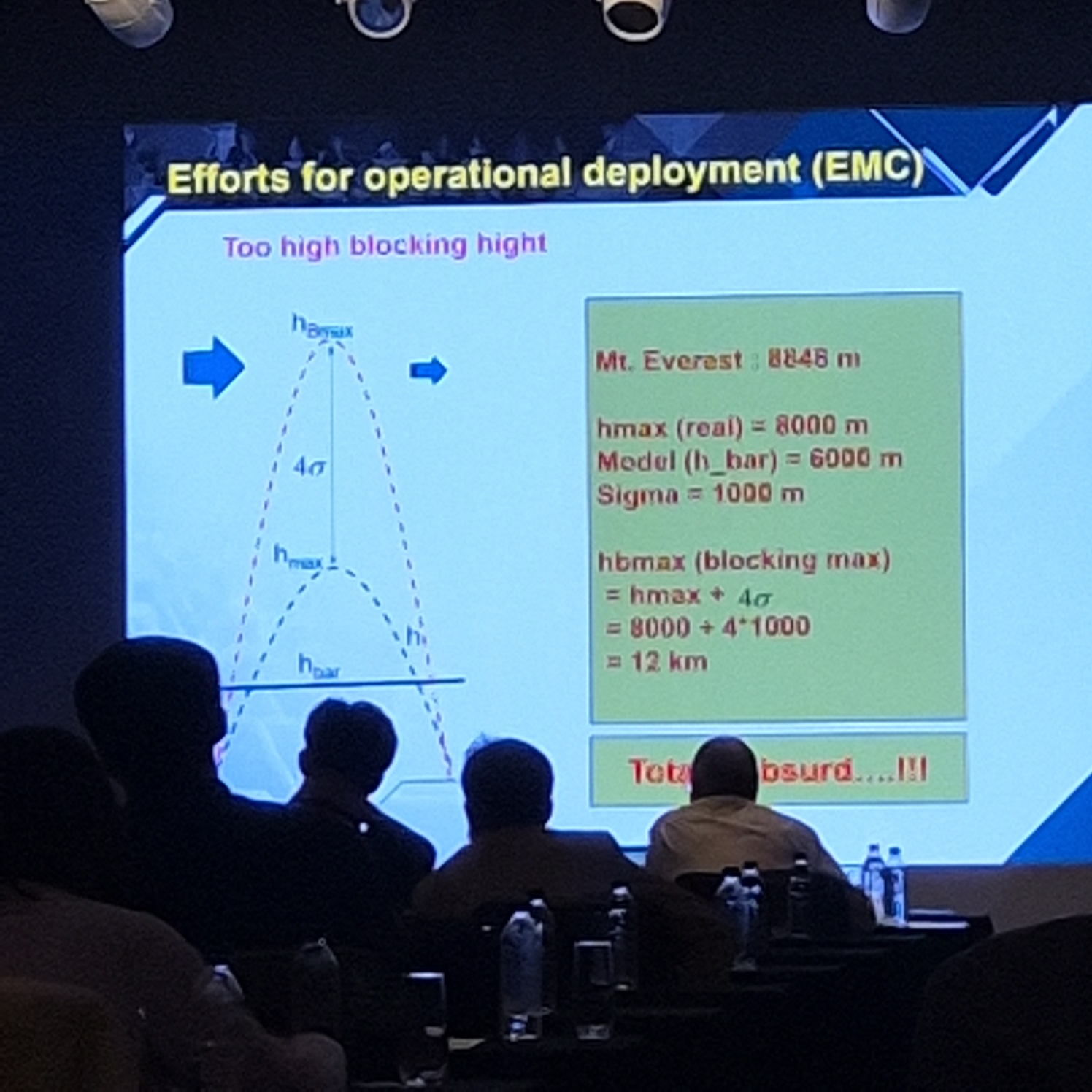
Key sessions covered ▲diagnosis and improvement of radiation and cloud hydrological processes in the KIM model ▲ways to improve the accuracy of polar temperature change predictions ▲Efforts to resolve model calculation errors caused by complex terrain features (e.g., the mountainous terrain issue described as “Total absurd”), among other strategies for refining the model’s “physics package.”
It was discussed that the accuracy with which a model calculates cloud condensation, evaporation, and precipitation processes is the key technology that determines the success or failure of a forecast.
The 2025 KIAPS International Symposium was widely recognized as an opportunity to assess the current status of KIM, the numerical weather prediction model independently developed by South Korea, and to take a significant step forward through collaboration with world-renowned scholars. Amid an increasingly severe climate crisis, weather forecasting has evolved beyond the mere delivery of information to become a core national security asset that safeguards the lives and safety of the public. All eyes are now on whether the “Organic Collaboration Between Research and Operations (R2O)” discussed at this symposium will lead to the advancement of actual forecasting systems, thereby yielding tangible results such as improved forecast quality that the public can trust even amid uncertain weather conditions and the strengthening of South Korea’s meteorological sovereignty.
Reporter Yoon Si-young