On December 10 of last year, the Australian government enacted a law restricting social media use by minors under the age of 16. This law prohibits minors under the age of 16 from creating and using social media accounts without parental consent, and imposes fines of up to approximately 48.5 billion won on social media platforms that violate the law.
Even though this is a highly controversial bill in an era when it’s impossible to imagine life without social media, 77% of Australians supported it. However, some child welfare experts and technology specialists voiced their opposition, arguing that the bill infringes on young people’s fundamental rights—such as the right to access and participate—and raising concerns that it could actually drive social media use underground.
Background of Implementation
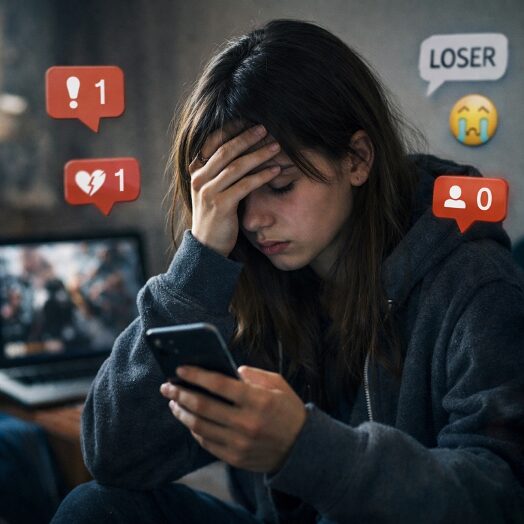
The Australian government enacted this legislation after identifying key issues—such as exposure to violent content, rising rates of depression and suicide among youth, and cyberbullying—resulting from excessive youth exposure to social media, and determining that these are no longer problems to be addressed solely by individuals or families. Furthermore, the government cited the view that algorithmic recommendation systems reinforce addiction as a basis for the legislation. Countries currently discussing and pursuing similar legislation are also actively reviewing these measures, citing the same reasons.
Issues Arising After Implementation
Since the bill went into effect, its implementation in Australian society has not been smooth. Unlike South Korea, Australia does not require residents to register a national identification number, so there is no way to prevent users from creating accounts by lying about their age. Consequently, if a child creates an account by lying about their age with their parents’ help, they can use the account even if they are under 16 years of age. Furthermore, since it is impossible to prevent users from accessing social media without creating an account, the law cannot completely eliminate the risk of exposure to harmful content. Due to these loopholes, the legislation is facing significant challenges in being effectively enforced in society.
What about South Korea?
So what about South Korea? Recently, the Lee Jae-myung administration has also raised the issue of regulating social media use among teenagers. Given the high rates of mobile device and social media use among South Korean teenagers, this is a regulation worth considering.
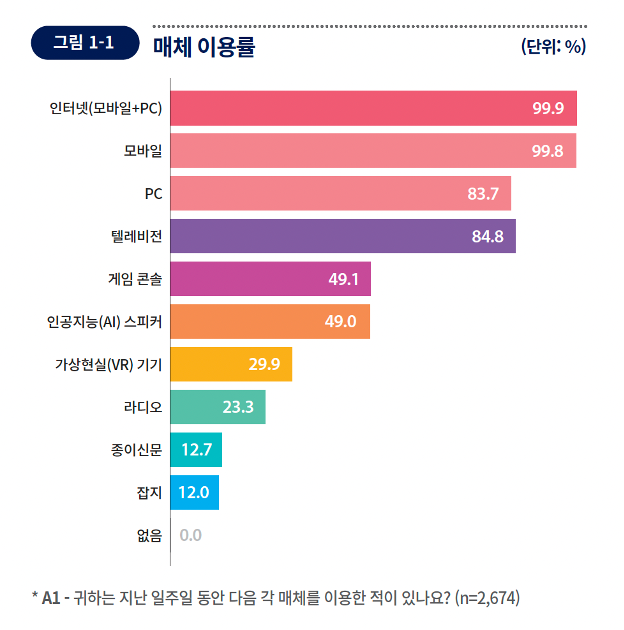
According to the “Survey on Media Use Among Adolescents” released by the Korea Press Foundation on December 31, 2025, the rate of mobile media use among adolescents reached 99.8%. When including PC usage, the figure rises to 99.9%, indicating that nearly all adolescents are exposed to media.
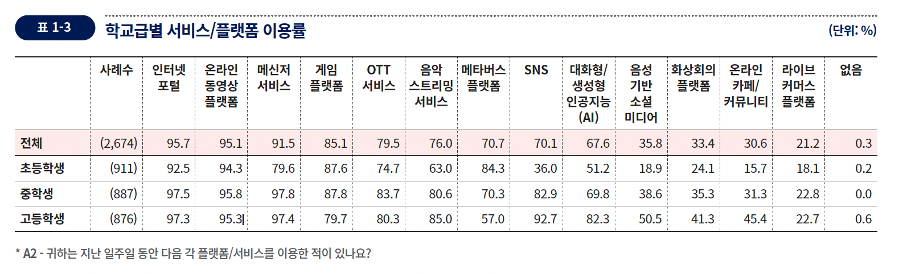
Furthermore, as media usage rates continue to rise, the use of online video platforms and social media is also increasing. The table below shows that usage rates for internet portals and online video platforms are evenly distributed across all school levels. A key point to note here is that the usage rate of online video platforms among elementary school students is quite high at 94.3%. With the popularity of short-form video content showing no signs of waning and having become a part of everyday life, adolescents’ access to online videos is becoming easier, more diverse, and more widespread.
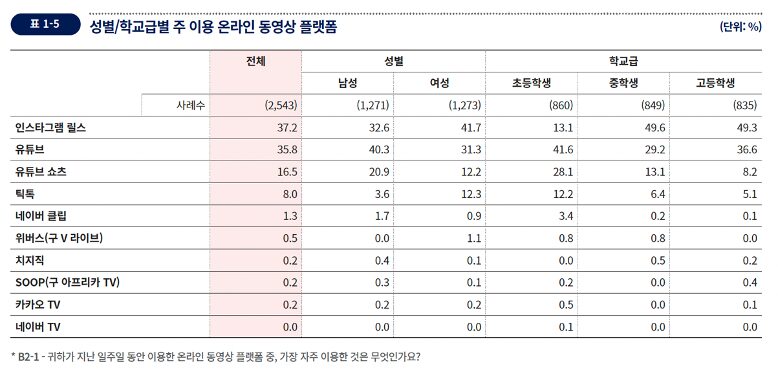
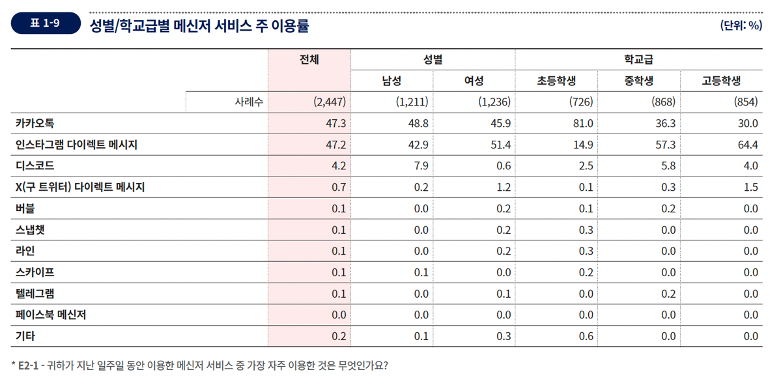
What is the most popular online video platform among teenagers? According to a survey, Instagram Reels took first place, followed by YouTube Shorts. In terms of messaging services, Instagram Direct Messages took second place by a narrow margin, edging out KakaoTalk, which is the most widely used messaging app in South Korea. In other words, this shows that teenagers frequently use Instagram, a popular social media platform, both to watch video content and to stay in touch with others.
Young People's Actual Reactions
We interviewed high school students to hear their actual reactions to the ban on social media use by teenagers.
- Many countries are currently discussing bans and regulations on social media for minors. What do you think about implementing such measures in South Korea as well?
Since social media isn’t all negative, they responded that students’ negative reactions would likely be strong. They also stated that regulations banning social media for teenagers would not serve as a means of protecting them but would instead act as a form of control, and above all, they expressed concern about the lack of communication channels. On the other hand, there were also neutral responses. They noted that bans and regulations on social media for teenagers would likely have some positive effects in South Korea as well, particularly in reducing issues such as addiction caused by excessive use and a decline in academic focus. However, they added that regulations tailored to reality are more necessary than a complete ban.
- Are there times when you feel that social media is harmful to teenagers?
Even students who expressed negative views on regulations banning social media for teenagers were aware of the harmful effects of social media. In particular, they recognized that a great deal of harmful content—which teenagers should not have to be exposed to—is widely circulated and easily accessible. They reported that people create increasingly sensational content to attract attention, and that the social media environment—marked by body image comparisons, a culture of showing off, and malicious comments—has caused them to suffer from low self-esteem and stress. They also reported experiencing inconveniences in their daily lives, such as feeling mentally foggy or having their daily routines disrupted due to prolonged use.
- Even if it isn't a ban, do you think teenagers need regulations regarding social media?
Based on these experiences, he expressed the view that regulations regarding social media for teenagers appear necessary, even if they are not intended as a form of control. Citing experiences where reports of harmful content did not seem to be properly addressed, he argued that improving the social media environment itself—such as strengthening the screening of harmful content, imposing usage time limits, and making teen accounts private—is a more necessary approach. He also argued that since a complete ban seems unrealistic, it is more important to prioritize the implementation of feasible measures.
Is a ban the only solution?
We must consider whether banning access to social media platforms is a fundamental solution to the problem of students’ excessive use of social media. It is true that regulations aimed at ensuring safe social media use often fail to keep pace with technological advancements and rapidly changing trends. However, just as in Australia, a complete ban would likely be difficult to implement. This would raise concerns regarding adolescents’ fundamental rights, such as freedom of expression and the right to participate. Therefore, it seems necessary to discuss measures such as strengthening age-restriction regulations, reducing exposure to harmful content, and imposing stricter penalties for uploading harmful content.
Amid concerns about a complete ban and the need to explore more realistic alternatives, many countries are following Australia’s lead and implementing laws that prohibit minors from using social media. In particular, European countries such as Spain, Germany, France, and Denmark are actively discussing and pushing forward with such legislation. While South Korea also needs to pursue such policies as actively as these countries, it must carefully balance concerns about a total ban with the need for various alternatives, all while ensuring that the civil liberties of young people are not infringed upon.