
The Chinese version of “Running Man,” *Run, Brothers!*, the U.S. version of “Grandpas Over Flowers,” *Better Late Than Never*; the U.S. version of “The King of Mask Singer,” *The Masked Singer*; and the Chinese version of “Where Is Dad?,” *Papa, Let’s Go*—variety shows familiar to us are being produced in international versions and are even gaining huge popularity. However, these programs aren’t simply given direct translations of their original titles; instead, they’re produced with new titles tailored to the cultural sensibilities of each country. Because of this, some people might think:

“They’re not even using the original title, and the cast is different—isn’t that copyright infringement?”
To put it simply, it is precisely because Korea wisely leveraged these characteristics that it has risen to its current status as a cultural powerhouse. In the early days of full-scale exports of Korean content, the export of dramas was far more active than that of variety shows. This was because dramas typically had a simple format structure centered on a fixed script and direction. In contrast, variety shows do not follow a completely fixed script and involve many factors to consider, such as the location and on-site atmosphere. So, how were all the variety shows mentioned in the introduction exported, and how did they manage to gain popularity?
The answer lies in “format exports.” This approach has evolved from simply broadcasting Korean dramas and movies with subtitles to exporting the “entire production model (format)” of variety shows overseas. Full-scale format exports have been on the rise since 2011.
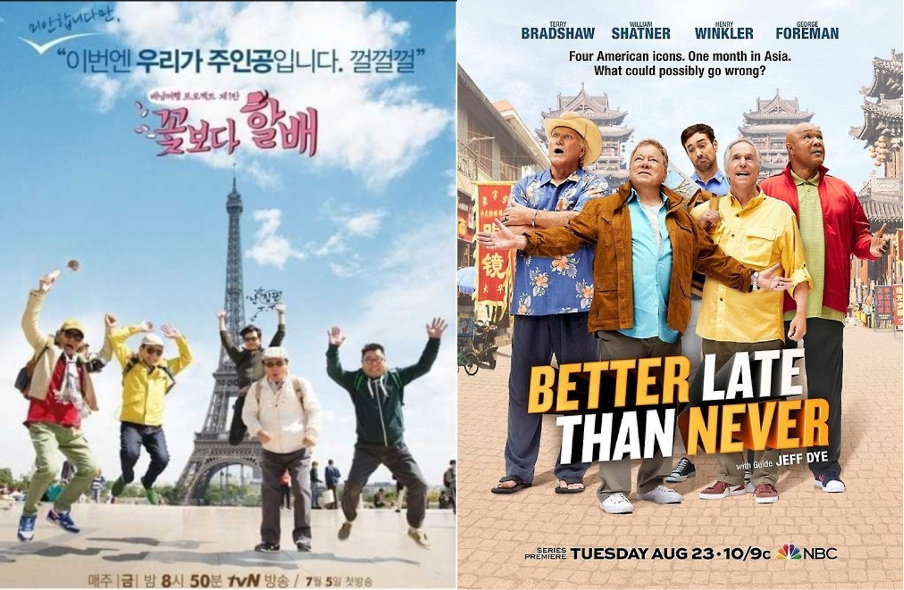
The biggest reason Korean variety show formats have gained popularity overseas is that they do not have a strong “Korean context.” Simply put, the basic structure of Korean variety shows does not strongly reflect the culture or background of any specific country. Take *King of Mask Singer* as an example: the core format involves celebrities wearing masks and competing based solely on their voices and singing ability, while viewers and panelists try to guess their identities based on their voices alone. There is no reason this program must be produced in Korea. Nor do the masked singers necessarily have to be Korean.
It’s not just *The King of Mask Singer*. Numerous Korean variety shows share a key characteristic: they can be “recontextualized” to suit local cultures, thereby reducing the potential for cultural clashes. In other words, they have a high potential for “content adaptation.” This is possible because recent Korean content possesses the characteristics of a “rhizomatic structure.”
Simply put, a rhizomatic structure refers to a structure that, like the rhizomes of a plant, extends in all directions rather than just up and down; even if one part is severed, it can sprout again from another direction; and it expands from multiple points without a central core. This structure does not collapse entirely even if its center is destroyed; rather, it possesses the flexibility to branch out in various forms.
Korea’s rhizomatic screen culture means that even if a piece of content is interrupted, banned, or fails, it can be restored and expanded in other forms. Endless branching occurs as TV broadcasts are re-consumed as YouTube clips, made available for replay on OTT platforms, and repurposed as short-form content on social media. Furthermore, it produces additional content—such as remakes and collaborations—that can simultaneously expand fanbases.
Ultimately, Korean content has succeeded overseas thanks to its characteristics: it lacks a strong Korean context, making it highly adaptable for international markets, and its rhizomatic structure creates significant potential for the production of derivative content. With new and innovative content constantly emerging, it is expected that the export of these works will further fuel the growth of South Korea as it establishes itself as a cultural powerhouse.
However, the reality is that working conditions in the content production industry have yet to improve. It remains a mystery why the appearance fees for celebrities who participate only in filming are several times higher than the combined monthly salaries of the entire production staff, who handle every aspect of the production.
"This is just part of everyday life in this industry."
If you’re a professional working in industries such as advertising agencies, video production, event planning, or entertainment, you’ve probably heard this phrase at least once when looking for a job. Working conditions must be improved quickly for the many content creators who pull all-nighters as routinely as they eat meals—and who may even be working without time to eat. I hope that the content market, where “passion pay” is still being rationalized, can grow rapidly to keep pace with the speed of content development.