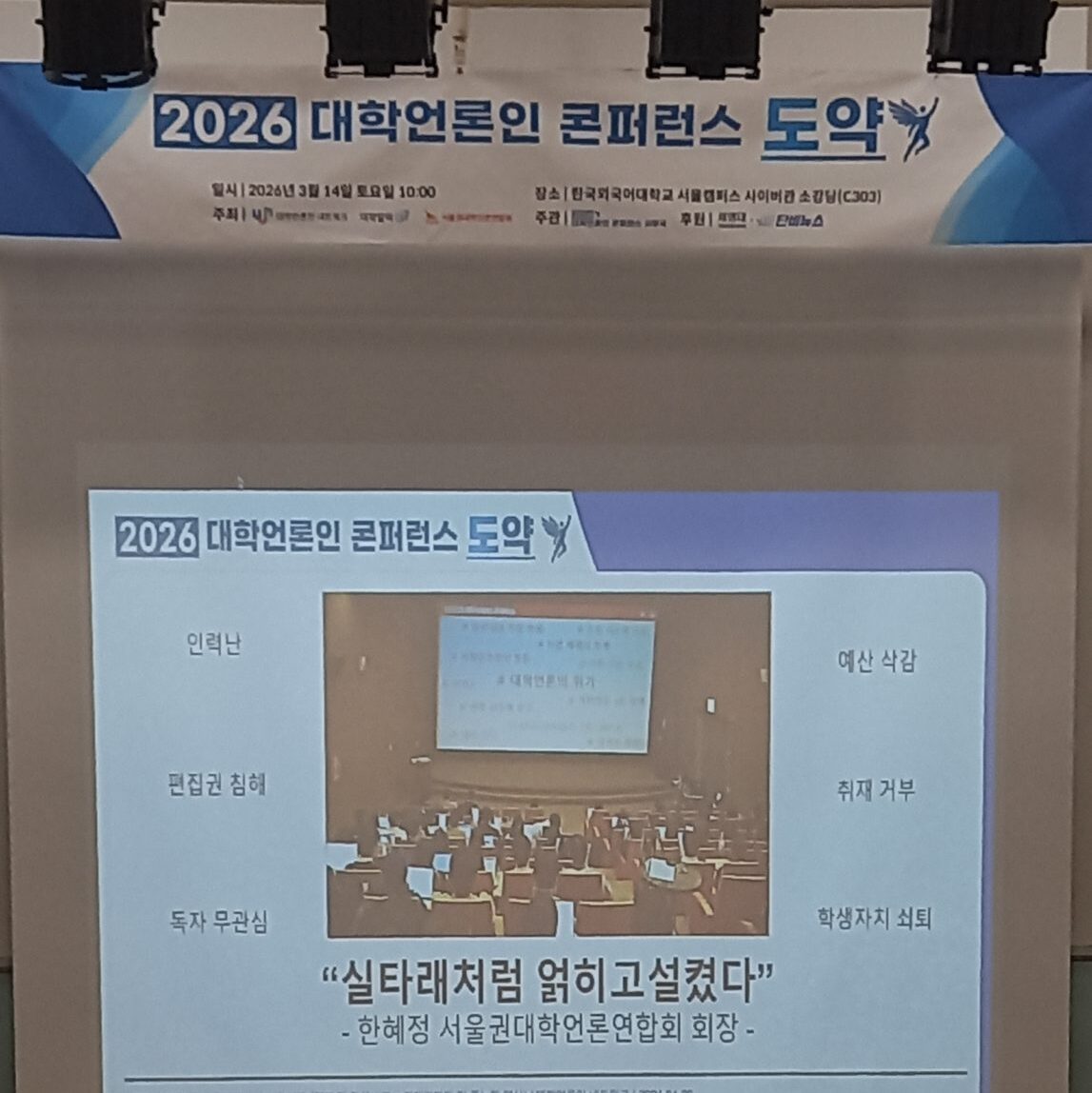
[Suwan News = Cheongra On, a youth media outlet] University media, which used to deliver campus news from the front lines, is now facing turmoil. Amid a loss of readership, budget cuts, and a rapid shift toward the digital environment, the influence of university media is gradually waning. Once at the center of the campus public sphere, university media now finds itself in a situation where it must consider its very survival.
This is not a temporary crisis. As early as 1992, the Segye Ilbo pointed out the reality that staffing support for student newspapers was sharply declining and that newspaper operations were becoming dysfunctional. This can be viewed as a chronic crisis stemming from structural limitations. Many articles in university media outlets amount to little more than the dissemination of official announcements. Furthermore, the inability to secure complete independence from the university administration acts as a factor that restricts the media’s fundamental functions. Under these conditions, critics point out that it is difficult to engage readers using only traditional methods.
In light of this situation, this year’s conference introduced the keyword “leap forward.” This signifies that what is needed is not merely incremental improvement, but a fundamental transformation that redefines the role and structure of college media. The recently held “2026 University Journalists Conference” also shared this sense of urgency and served as a forum to explore the direction university media should take.
“Leap Forward” can be discussed on multiple levels. First, in terms of content, there is a need to shift from merely conveying announcements to in-depth reporting and investigative journalism. This means there is a need for special features that critically examine campus issues and actively reflect the voices of the student community. From a platform perspective, there is a strong call to actively utilize digital channels such as social media and video content. This is not merely a change in format, but also a process of redesigning the points of contact with readers.
The operational structure is also a key challenge. If university media cannot secure a certain degree of independence from the university, critical reporting will inevitably be stifled. A shift is needed toward strengthening their identity as autonomous media outlets and guaranteeing editorial independence. This is the minimum requirement for university media to function not merely as a public relations tool, but as an active participant in shaping the campus public sphere.
Ultimately, the survival strategy for college media must translate into concrete actions guided by the vision of “leaping forward.” In a changing media landscape, redefining their role and rebuilding relationships with readers is no longer an option but a necessity. Whether university media can once again establish itself at the center of the public sphere depends not on declarations, but on action.
Kim Hyo-hyun, Reporter for Cheongra On
This article appeared in our sister publication, “Youth Media Cheongra-on.”