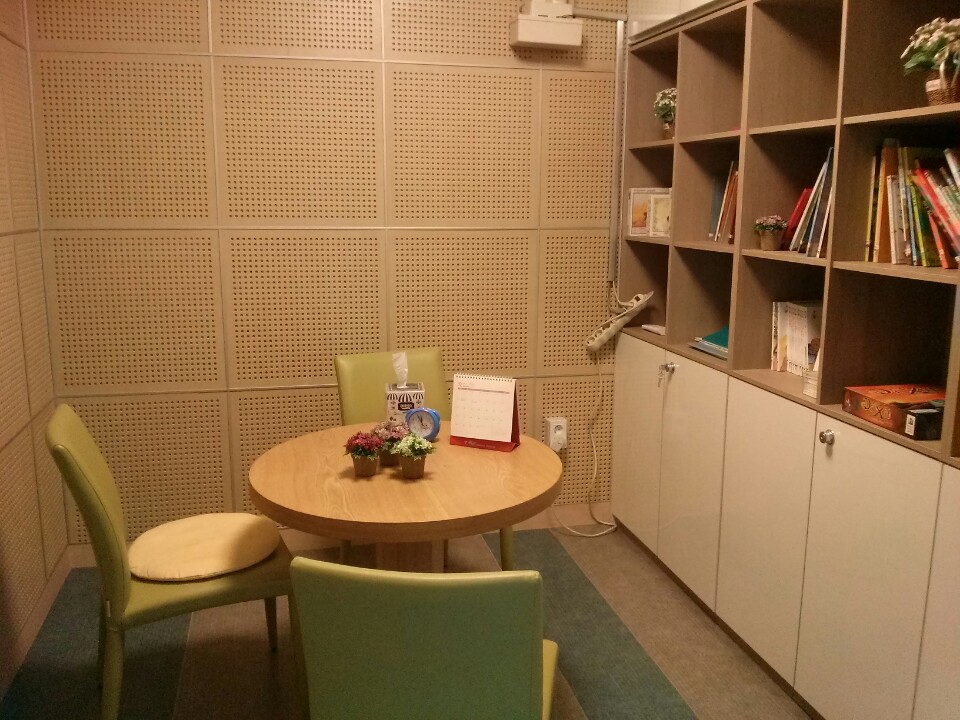
On October 1, the Chungcheong Regional Trauma Center at Gongju National Hospital, in collaboration with the Daejeon Metropolitan Mental Health and Welfare Center and the Sejong City Metropolitan Mental Health and Welfare Center, held the “2026 Daejeon-Sejong Disaster Response Personnel Capacity-Building Workshop” at the hospital’s Mental Health Center. The workshop centered on hands-on simulation exercises where participants provided psychological support in spaces designed to replicate disaster scenes, such as funeral homes where bereaved families had gathered, evacuation shelters for disaster victims, and hospitals treating the injured.
The workshop was organized to enhance the on-site disaster psychological support capabilities and expertise of staff at metropolitan and local mental health and welfare centers in the Daejeon and Sejong regions. Officials from the National Trauma Center, regional trauma centers, the Daejeon-Sejong Disaster Psychological Recovery Support Center, and the Chungnam Metropolitan Mental Health and Welfare Center also attended as observers.
In the morning, the Cheongju Heungdeok Mental Health and Welfare Center shared a case study of psychological support provided during the gas explosion in Bongmyeong-dong, Cheongju, followed by a session on location-specific disaster psychological support training led by the Chungcheong Regional Trauma Center. In the afternoon, after an introduction to simulation training methods, a review of the scenarios, and the assignment of roles, three 40-minute location-specific simulation exercises were conducted. Participants moved from one simulated scene to the next as each session progressed.
The training went a step beyond traditional manual- or lecture-based instruction. Based on scenarios developed by the center to reflect disaster types likely to occur in the Chungcheong region, the training was designed to allow participants to learn response methods in environments resembling real-life situations. Moving sequentially through spaces simulating a funeral home, an evacuation shelter, and a hospital, participants provided psychological support tailored to the characteristics of those affected in each situation and refined their response methods based on feedback regarding the intervention processes at each location. Following the training, a question-and-answer session, post-training feedback from observing agencies, and a roundtable discussion among the organizing agencies took place. The workshop was held as a one-day event from 10:10 a.m. to 5:30 p.m.
Participants commented, “We were able to experience a sense of realism because the actual scenes were recreated,” and added, “It helped us go beyond existing Psychological First Aid (PFA) training to learn psychological support intervention methods that can be applied in real-life situations.”
The Chungcheong Regional Trauma Center introduced the region’s first hands-on disaster psychological support training last July for staff at the North Chungcheong Provincial and Local Mental Health and Welfare Centers, and has now expanded the program to Daejeon and Sejong. The center plans to conduct simulation training throughout the year to further enhance the expertise of disaster response personnel within the region.
Choi Jong-hyuk, Director of the National Gongju Hospital, stated, “At disaster sites, it is crucial to have the practical skills to quickly assess the situation and the characteristics of those affected and provide appropriate psychological support,” and “We will continue to work closely with relevant agencies to strengthen our field-centered disaster mental health response system, thereby enhancing the expertise of disaster response personnel and providing psychological support that offers tangible help to the public,” he said.