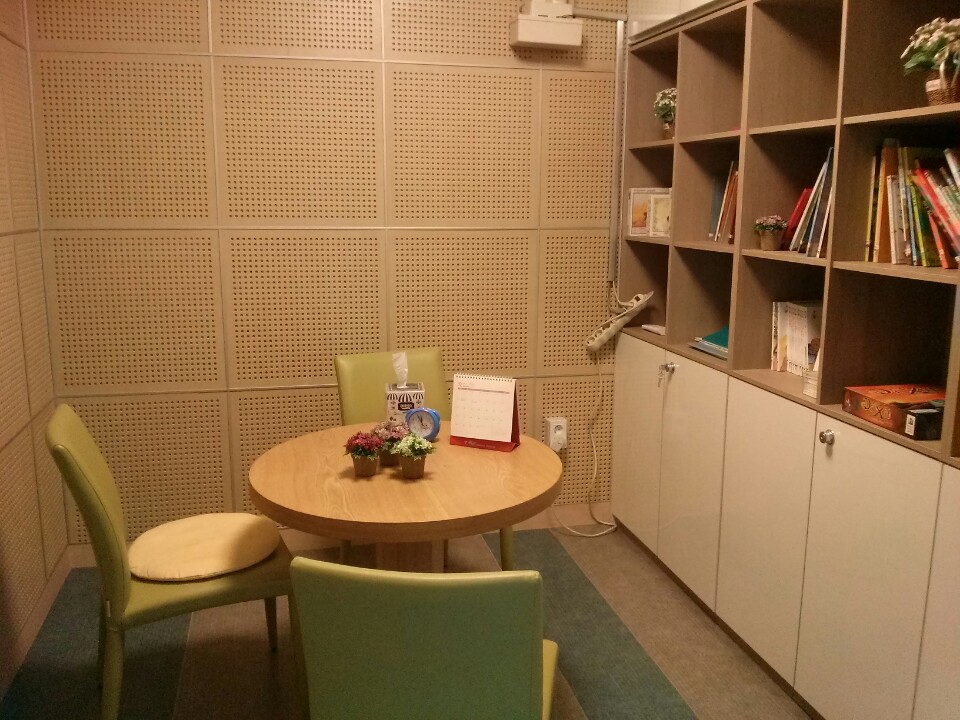
On October 1, the Ministry of Health and Welfare and the Korea Health Information Agency visited Korea University Guro Hospital to review the progress of the “Medical AI Testbed Support Project” pilot program and listen to suggestions from the field.
This project aims to support the verification of the clinical efficacy and cost-effectiveness of medical AI products and services—including AI medical devices approved by the Ministry of Food and Drug Safety—in actual clinical settings. In June, 21 medical AI small and medium-sized enterprises (SMEs) were paired with 22 medical data-centric hospitals, and a total of 4.8 billion won will be provided in funding through the end of December this year. The results will be monitored until December 31 of next year.
The projects are divided into two categories. Category 1, which involves the clinical application of AI medical devices—such as diagnostic aids and prognosis predictors—that have already received MFDS approval, has been allocated 500 million won each to four multi-institution projects and 250 million won each to eight single-institution projects. Type 2, which covers AI for hospital operations and management—such as record automation, standardization, and monitoring—that is not classified as a medical device, has 10 projects, each receiving 200 million won. The government covers 80% of the project costs, while companies bear approximately 20% (15% for small businesses and 25% for medium-sized businesses).
Participating companies are those that develop and supply medical AI products and services while securing real-world data (RWD) from actual clinical settings. Medical data-centric hospitals are institutions that support the use of medical data accumulated at hospitals for research and AI validation; since 2020, 45 medical institutions across seven consortia have been designated as such. These hospitals organize basic information—such as diagnoses, tests, medications, and treatments—into datasets with a common structure, and operate dedicated data organizations and data review committees led by their Chief Information Officers (CIOs).
On this day, the two companies demonstrated their technologies at Korea University Guro Hospital. Sumbit AI showcased technology that uses AI to analyze chest X-ray images and automatically generate preliminary reading reports for physicians to reference, while AVIS presented technology that uses AI to analyze patients’ biopsy images and measure information necessary for cancer diagnosis. The Ministry of Health and Welfare gathered suggestions regarding the data integration and clinical application processes.
Starting with this visit, the Ministry of Health and Welfare and the Korea Health Information Agency plan to conduct on-site inspections of all testbed institutions. Since the core of the project lies not in simply extracting and using data, but in establishing a proof-of-concept environment by integrating with hospital systems to produce target deliverables, the inspections will focus on the progress of integration and the quality of the deliverables.
Choi Kyung-il, Director of Advanced Medical Support at the Ministry of Health and Welfare, stated, “To ensure that medical AI is successfully integrated into actual clinical practice, it is crucial to meticulously review the validation process.” He added, “We will swiftly incorporate the challenges identified in the field into institutional improvements to lay the groundwork for the stable growth of the medical AI industry.” Yeom Min-seop, President of the Korea Health Information Agency, said, “We will actively resolve the difficulties identified in the field to support the stable establishment of a demonstration ecosystem created jointly by hospitals and companies.”