[Suwan News = Reporter Kim Dong-ju] In the media market today, the visual entertainment provided by video content on smartphones continues to gain popularity, particularly among teenagers and young adults in their 20s. However, the number of teenagers who are over-reliant on or addicted to smartphones is on the rise. This is because, last year, four out of ten teenagers reported that they were in a state of over-reliance, unable to control their smartphone use on their own. In particular, the level of addiction was found to be severe among middle school students.
According to Professor David Levy of the University of Washington, excessive engagement with digital devices can lead to a decline in concentration, patience, and reading comprehension. It can also cause the brain’s structure to become hypersensitive to strong stimuli, while slowing its response to relatively mild stimuli and potentially leading to a lack of response.
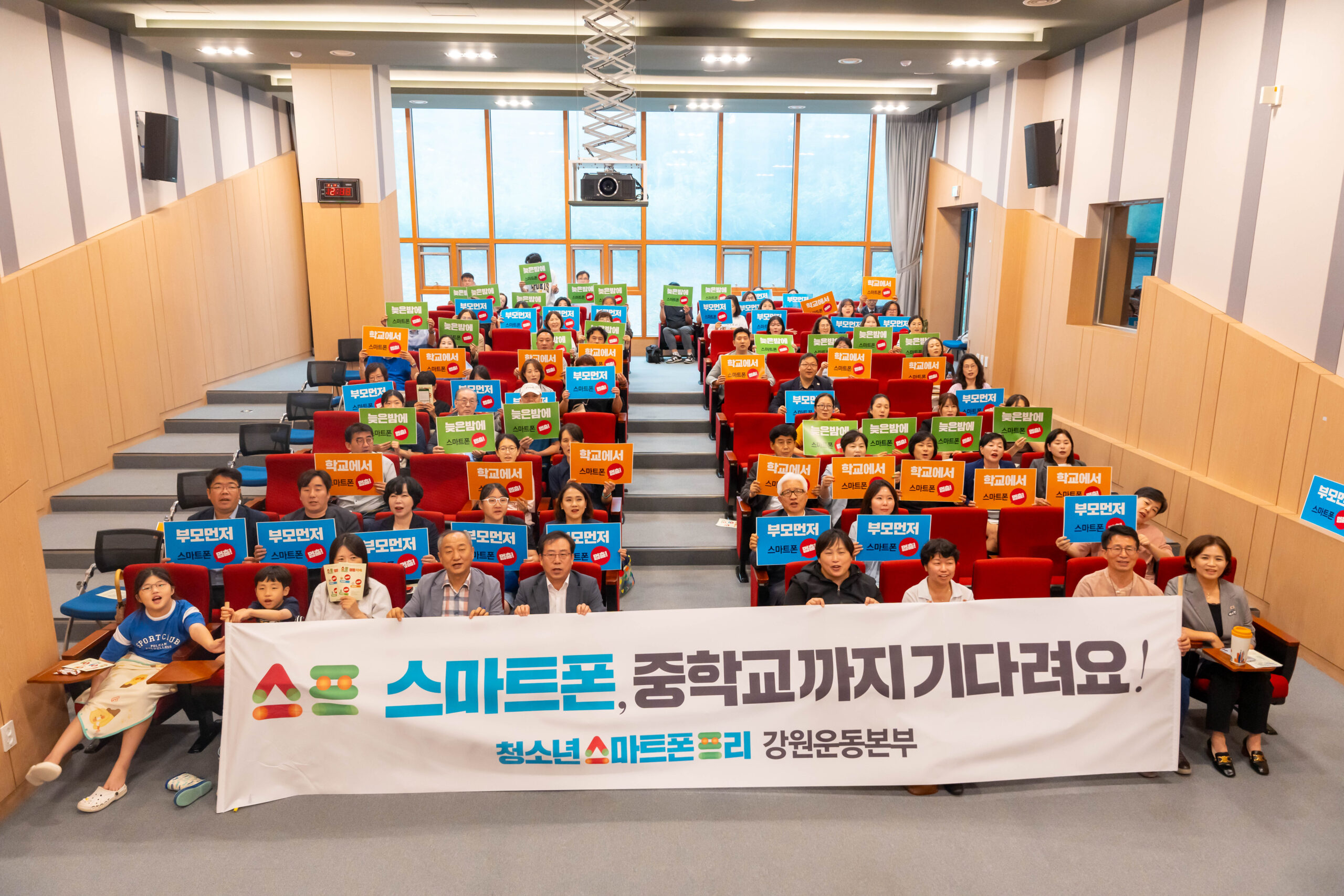
To raise public awareness of the issue of smartphone overdependence among youth and to address it, a social solidarity movement led by the Gangwon Province education community began on November 13, starting in Chuncheon and expanding to Wonju and Gangneung.
The movement goes beyond simply encouraging people to use their smartphones less; it aims to be an educational, social, and cultural movement. The Gangwon Movement Headquarters reported that when it was first launched, it was joined by about 60 educational institutions and social organizations within the province, as well as about 100 ordinary citizens.
When the Exercise Headquarters was first launched, a special lecture titled “Put Down Your Smartphones: Our Children’s Brains Have Changed” was delivered by Lee Jun-won, director of the Teachers’ Mind Center. While serving as a principal, Director Lee garnered attention by collaborating with KBS and EBS to conduct a scientific analysis of the effects of smartphone use on the brains of middle school students.
To promote physical activity, “Commentlets”—leaflets containing information on the potential risks of excessive smartphone use during the morning commute and ways to break free from such dependence—were distributed to students at Seongrim Elementary School in Chuncheon, Sammarim Elementary School in Wonju, and Dongmyeong Elementary School in Gangneung. Additionally, the campaign urged greater social awareness of physical activity through a parent pledge drive and outreach efforts conducted in front of schools.

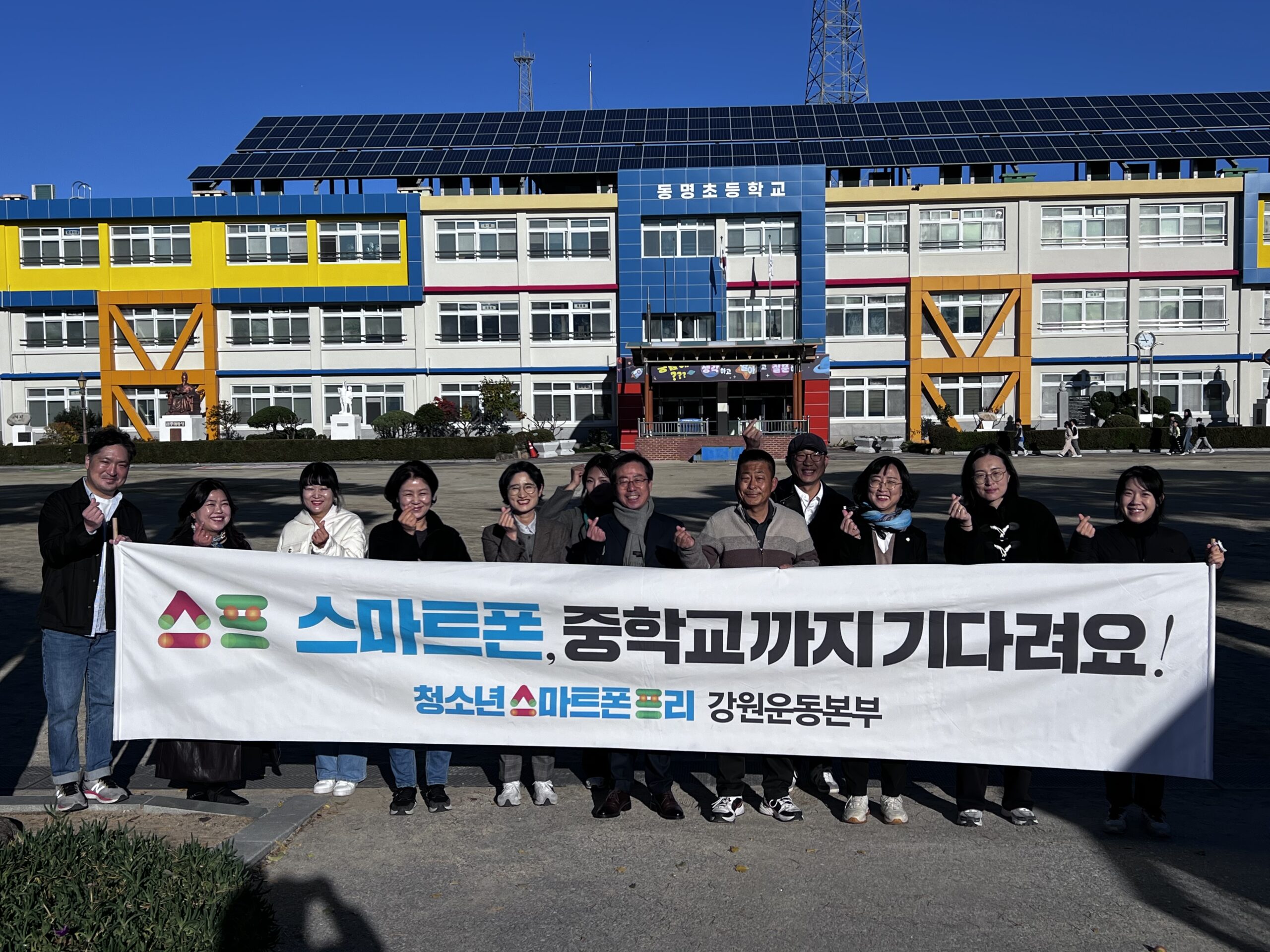

The ultimate goal of this movement is to create an environment where young people first experience the reality of the real world—rather than the artificial world of virtual reality—and engage with nature firsthand by moving their bodies instead of staring at smartphone screens. It also emphasizes that smartphone overdependence is not just an individual problem, but a societal issue that we must address together.
Park Kyung-nan, a member of the Gangneung City Council, stated, "We should restrict smartphone use based on sufficient social consensus reached through a process of public discussion involving both parents and students."
Teacher Hong In-gi previously delivered a lecture on media addiction in the smartphone era at the launch ceremony for the Gangneung Action Committee. He highlighted the laws and regulations governing smartphone use in schools as well as current usage patterns, and proposed practical guidelines for smartphone use that can be realistically applied in classrooms and school life. He highlighted the need to establish standards tailored to the educational setting by presenting examples of smartphone and social media regulations from various countries.
Some critics argue that the “Smartphone-Free” campaign infringes on the freedom and right to choose of adolescents. This is because having adults dictate adolescents’ smartphone use could constitute a violation of human rights. Regarding this, Jang Hye-geun, Secretary-General of the Gangneung City Campaign Headquarters, stated, “The intent is not to take smartphones away from adolescents. During infancy, childhood, and adolescence, brain development and social development take place through the real world, not the virtual world. The purpose of the ‘Smartphone-Free’ campaign is to protect and safeguard that period,” she said, adding, “As adults, we aim to protect children from being left defenseless against marketing strategies in the consumer market and to help ensure that adolescents’ time and opportunities for development are not exploited.”
Secretary-General Jang added, "I think there may be various opinions regarding the 'Smartphone-Free Campaign.' The views of the teenagers who are the target audience of this campaign are important, and I believe we need to have extensive discussions with them."
Kim Dong-ju, Reporter